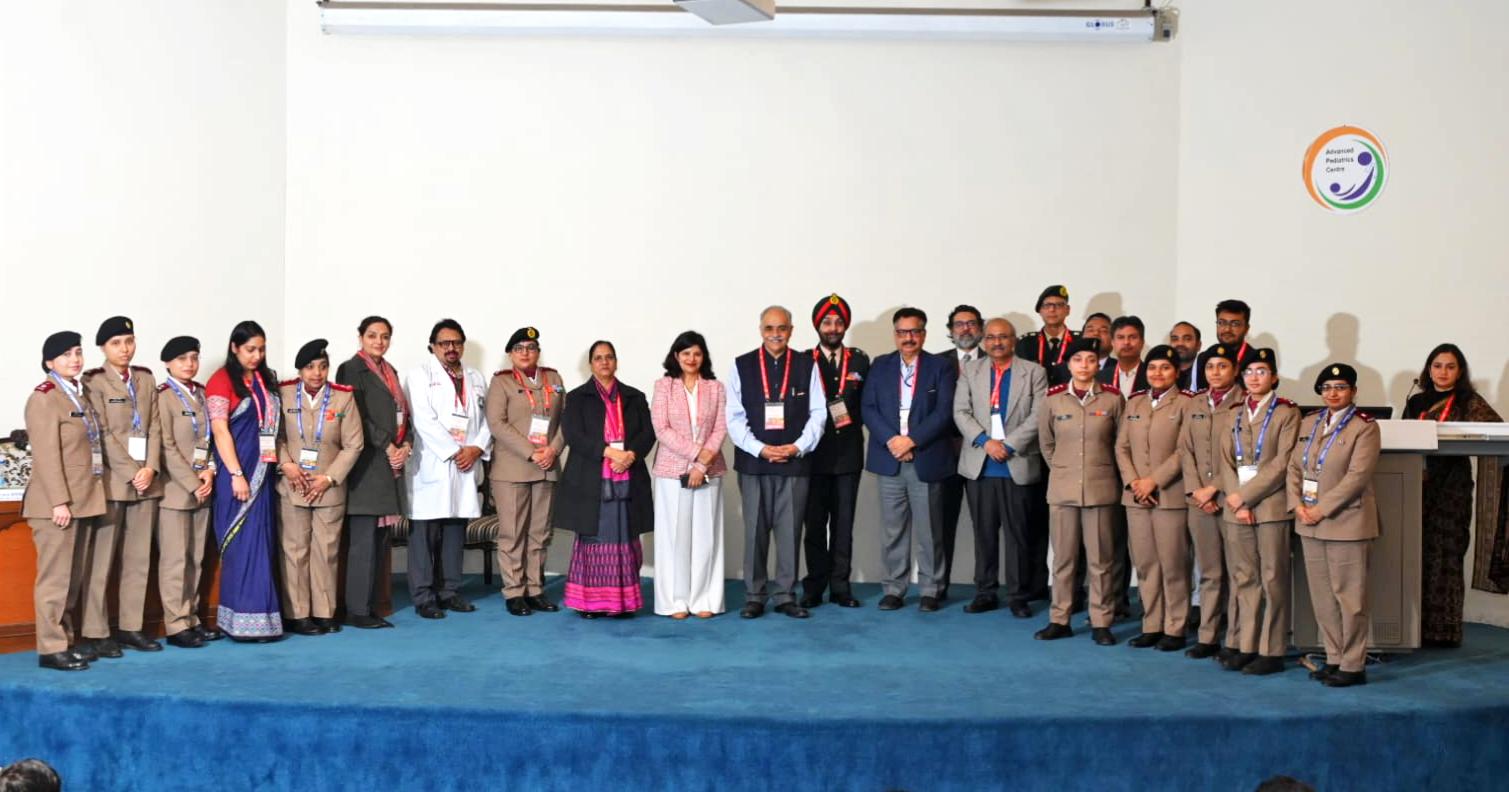

Witnesses Enthusiastic Participation of 300 Delegates from 16 AIIMS, Armed Forces and Civil Services
PGIMER – Armed Forces Collaboration Represents Powerful Convergence of Institutional Clinical Excellence And Military Medical Discipline : Prof. Vivek Lal
Chandigarh : “The Armed Forces have significantly advanced critical care medicine through discipline, innovation and rapid response systems. The collaboration between PGIMER and the Armed Forces represents a powerful convergence of institutional clinical excellence and military medical discipline,” stated Prof. Vivek Lal, Director, PGIMER, while addressing the gathering as Chief Guest at BRAIN WAVES–2026, a two-day National Neuro-Critical Care Summit being organised at PGIMER yesterday.
The Director further emphasised that neuro-critical emergencies demand precision, speed and seamless teamwork. He underscored that collaboration with Army Medical Services is strengthening neuro-critical care delivery, where every second during the golden hour can mean the difference between life and disability. “Platforms like BRAIN WAVES–2026 allow us to share best practices, innovate together and build a resilient emergency healthcare response that serves both civilian and defence settings,” he added.
Hosted by PGIMER in collaboration with the Society for Emergency, Trauma and Disaster (SETD) and the Society for Critical Care Nursing (SCCN), along with Stroke Services and the Department of Neurology, PGIMER, and with academic partnership from the BHISHM Project, Government of India, BRAIN WAVES–2026 witnessed enthusiastic participation from approximately 300 delegates. Participants included doctors and nursing professionals from 16 AIIMS across the country, as well as representatives from the Indian Army, Indian Air Force, Police Services and the Government of Haryana.
The summit’s central theme, “Golden Hour and Beyond: Race Against Time in Neuro Emergencies,” highlights the critical role of rapid, evidence-based and well-coordinated interventions in improving outcomes in stroke, neurotrauma and other time-sensitive neurological conditions.
The academic programme featured expert lectures, panel discussions and interactive sessions led by senior faculty from PGIMER and other Institutes of National Importance. Key discussions focused on golden hour management, inter-sectoral coordination, emergency response systems and strengthening preparedness across healthcare, defence and civil administration.
Eminent speakers included Prof. Dheeraj Khurana, Senior Neurologist, PGIMER; Major General Harkirat Singh Command Hospital, Dr Navdeep, Advisor Road safety, Govt of Punjab; Dr. Raman Sharma, Hospital Administration, PGIMER , along with several other distinguished experts from across the country. The sessions provided a comprehensive overview of clinical protocols, system-level challenges and real-world solutions in neuro-critical care.
Highlighting the Armed Forces’ longstanding contribution to medical innovation and emergency response, Major General Harkirat Singh, Command Hospital, said, “The Armed Forces Medical Services have consistently contributed to innovation, training and rapid response in critical care medicine. Collaborations with premier institutions like PGIMER strengthen our collective ability to manage complex neuro-emergencies, both in combat and civilian scenarios, ultimately benefiting the nation at large.”
Emphasising the importance of coordinated emergency response beyond hospital settings, Dr Navdeep Advisor Road safety, Punjab, remarked, “Effective management of neurological emergencies during the golden hour depends on seamless coordination between law enforcement, emergency services and medical institutions. Timely response, swift patient evacuation and close collaboration with premier institutes like PGIMER can significantly improve survival and neurological outcomes. Initiatives such as BRAIN WAVES–2026 strengthen this integrated approach and enhance system-wide preparedness.”
A major highlight of the summit was the conduct of three advanced, hands-on workshops designed to translate academic knowledge into real-time clinical action. The Stroke Simulation Workshop on IV Thrombolysis provided participants with scenario-based training focused on rapid patient assessment, protocol-driven decision-making and time-bound intervention strategies essential for effective stroke management.
The Trauma and Neuro-Surgical Workshop focused on emergency neurosurgical response, addressing critical decision-making under pressure, coordination between trauma teams and operating units, and stabilisation protocols during the golden hour.
Complementing this was the Paediatric and Neonatal Critical Care Workshop , which addressed the unique challenges of managing neurological emergencies in children and neonates within intensive care settings.
These workshops utilised advanced simulation technology, modern training equipment and evidence-based protocols to enhance hands-on skills, interdisciplinary coordination and clinical confidence among participants, reflecting the summit’s emphasis on practical preparedness alongside academic excellence.
Widely appreciated for its academic depth, clinical relevance and collaborative ethos, BRAIN WAVES–2026 concluded on a high note, reaffirming PGIMER’s leadership in neuro-critical care education and its enduring partnership with the Armed Forces in strengthening India’s emergency medical preparedness. The summit underscored the shared commitment of civilian and military healthcare systems to saving lives, reducing disability and ensuring timely, high-quality care during the most critical moments.



 By
By